

KAIYUE / PROFESSIONAL PRODUCTS
Speed Governor.
Find your next part.
A speed governor maintains generator engine RPM as electrical load rises or falls. In an electronic system, it compares pickup feedback with the speed setpoint and commands an actuator to adjust fuel. If the engine hunts or recovers slowly, inspect the pickup signal, wiring and linkage for faults before adjusting governor settings.
18PRODUCTS TO EXPLORE
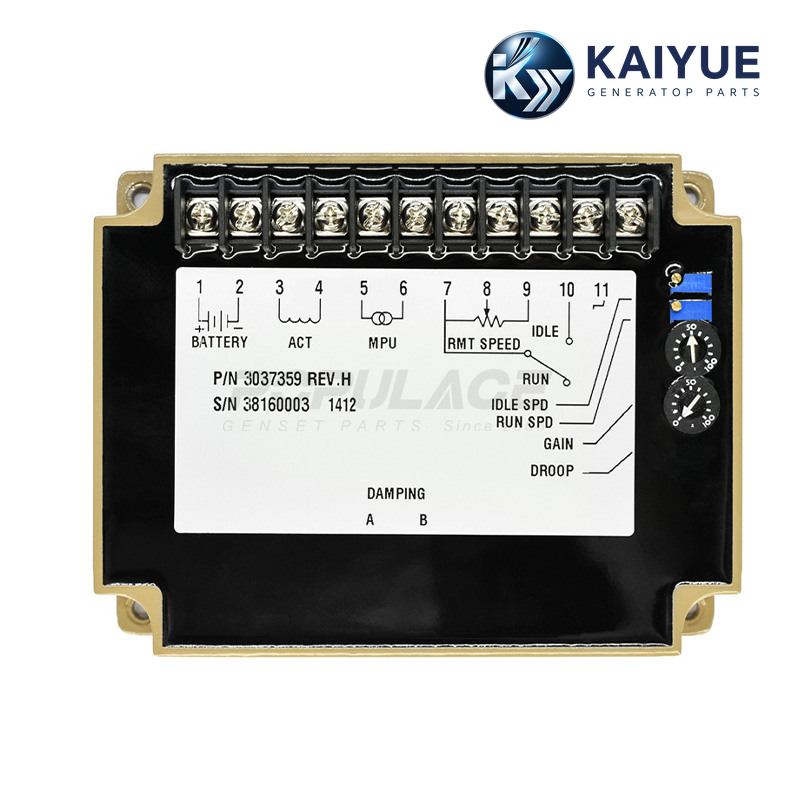
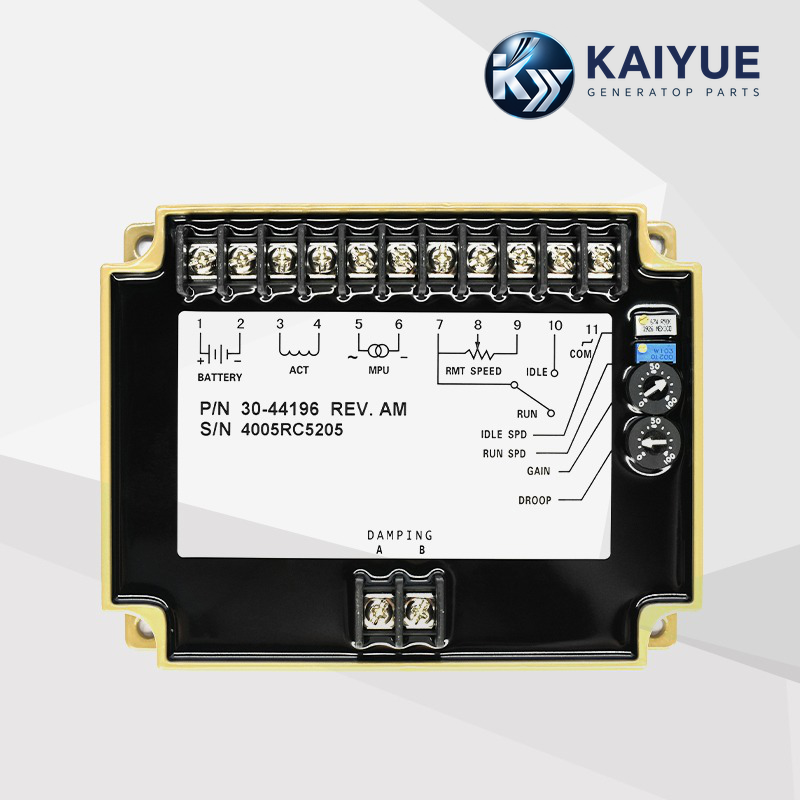
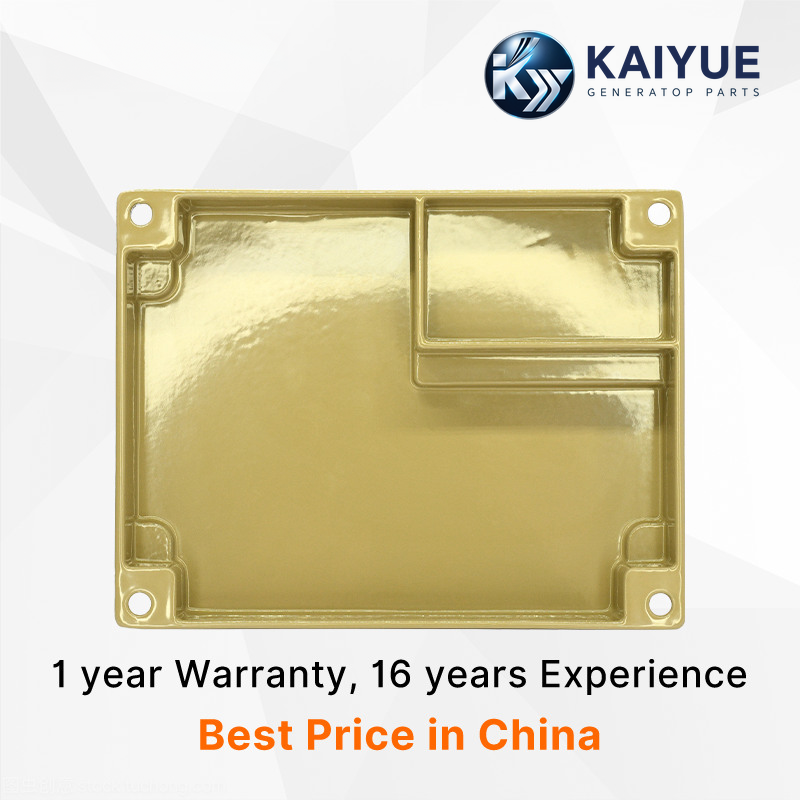
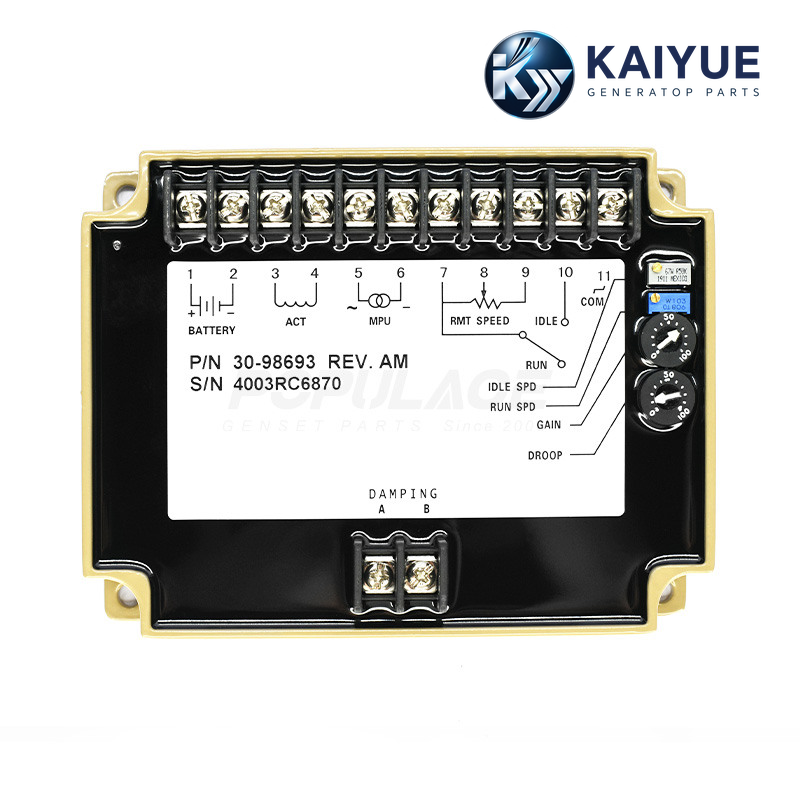
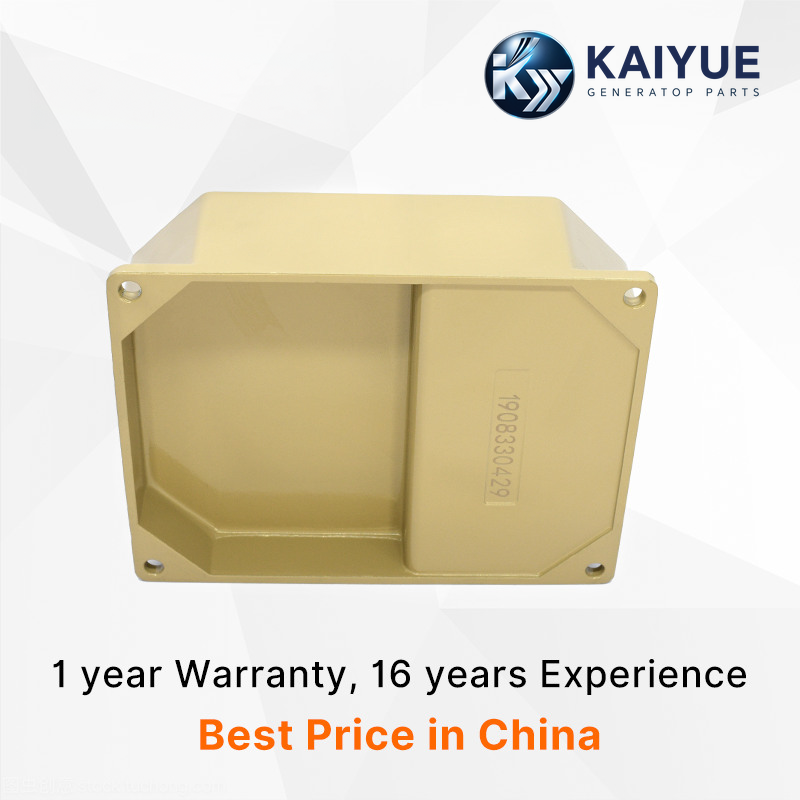
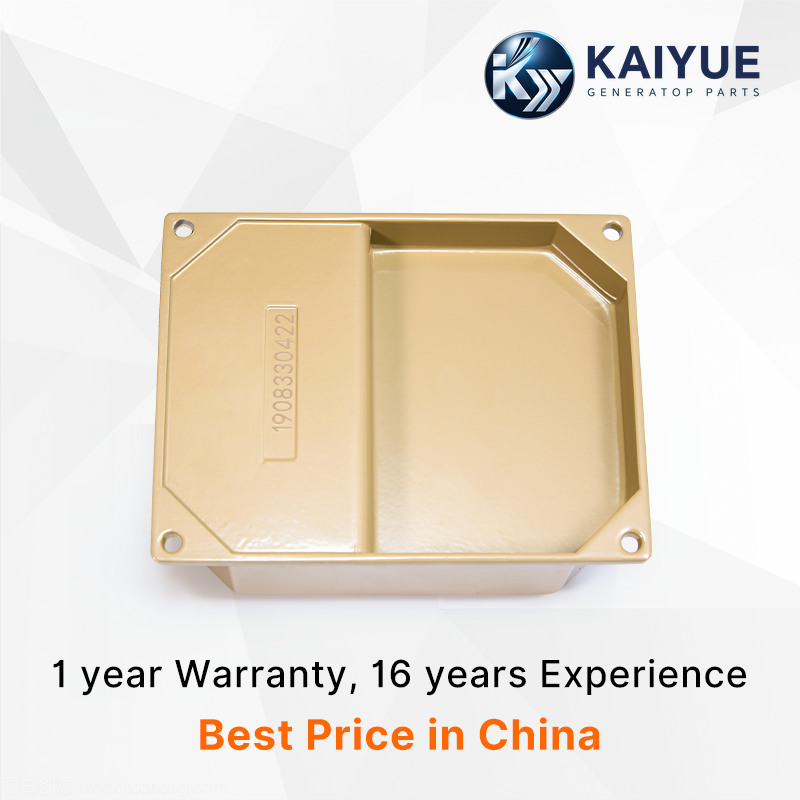
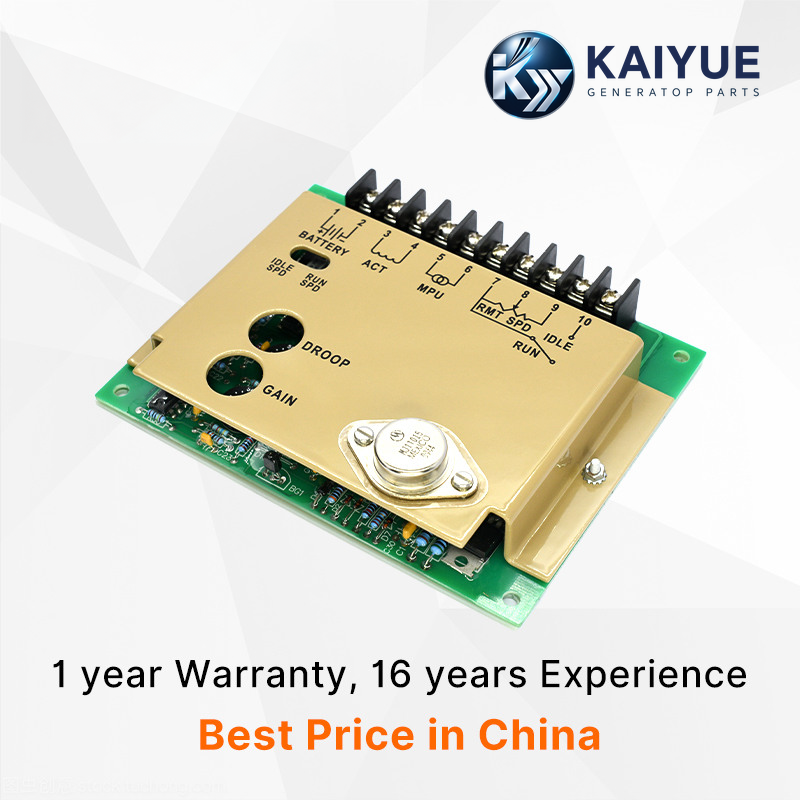
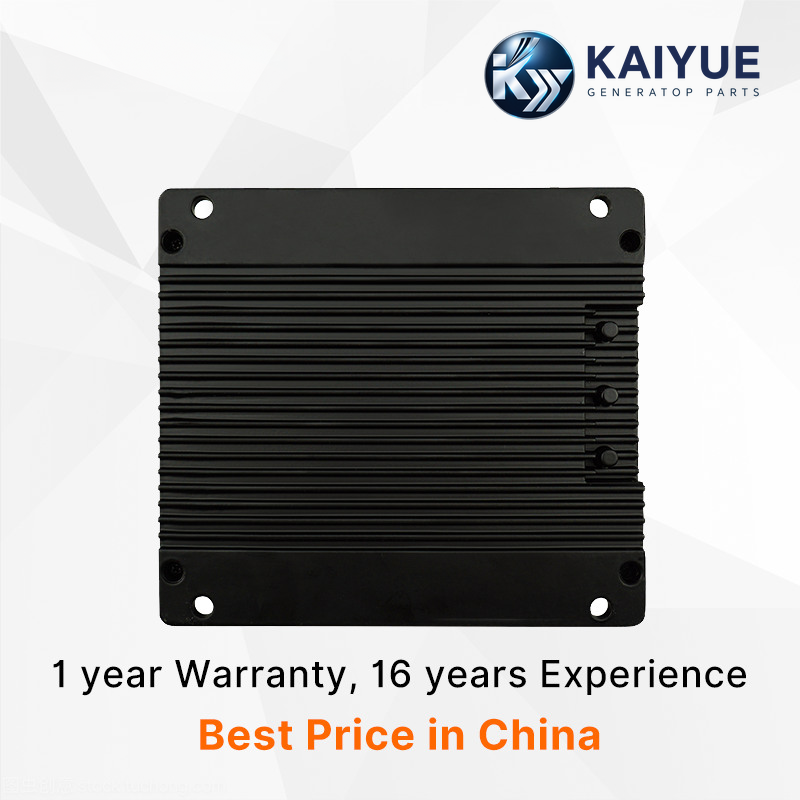
Speed Governor Technical Guide
Product features
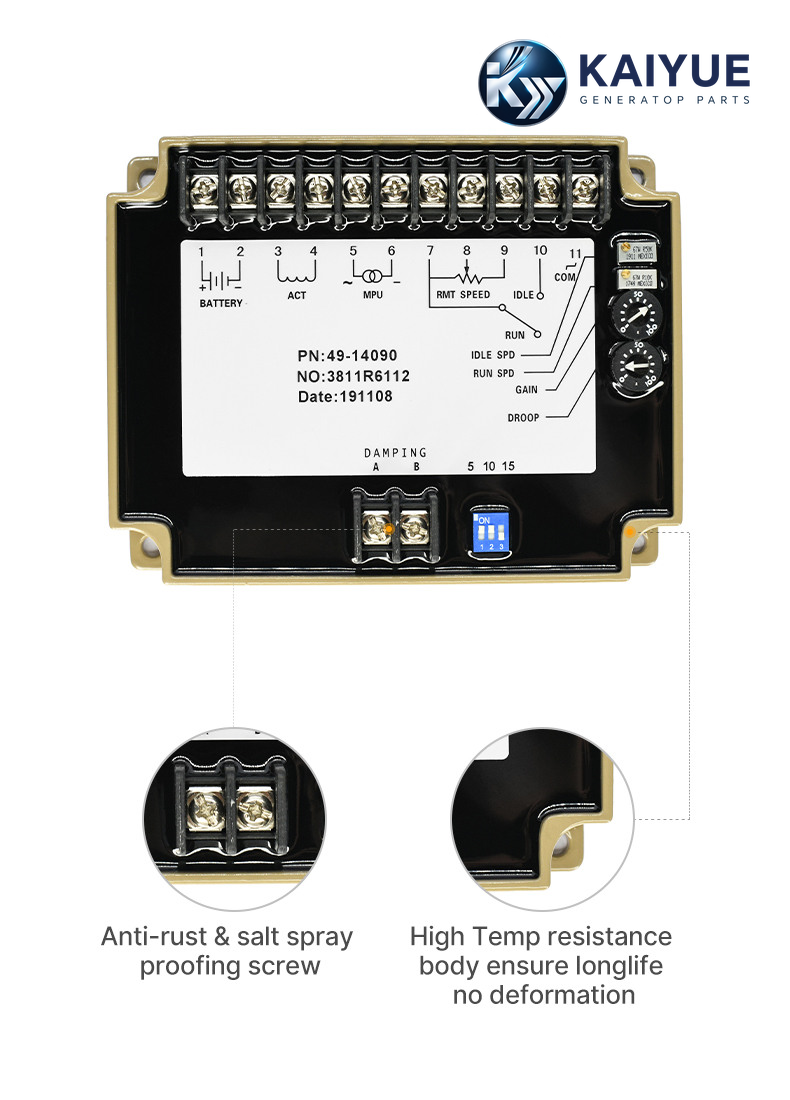
An electronic speed governor regulates engine RPM. Supply voltage, pickup input, actuator drive and support for droop or isochronous operation determine suitability for the panel.
How it works
A magnetic pickup sends speed pulses. The governor compares their frequency with its setpoint, then increases or decreases actuator drive to change fuel as the load varies.
Troubleshooting
For hunting or slow recovery, check pickup wiring, DC supply stability and fuel linkage before changing gain. Compare the frequency response at no load and under controlled load.
Replacement options
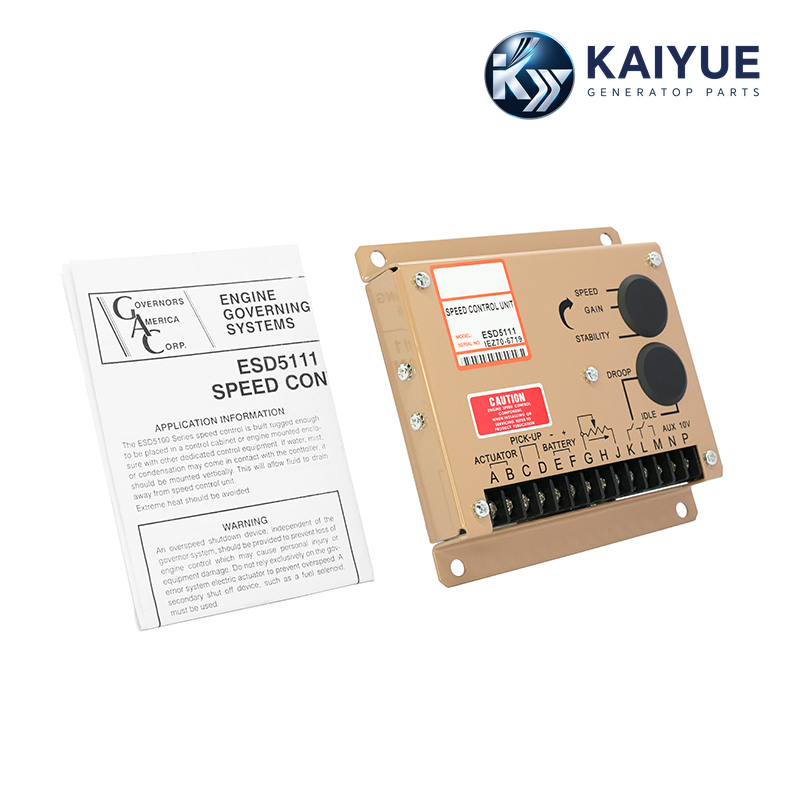
The catalog includes the ESD5111 and several other governor models. Compare actuator current, pickup signal and control mode for the full part reference.
How to replace it
Isolate the set and disable auto-start. Record wiring and existing settings, then follow the selected governor's commissioning guide and verify rated frequency, stability and overspeed protection.
PRODUCT GUIDANCE
Frequently asked questions
Speed Governor guidance for selection, use and purchasing.
Explore more FAQs ↗What does a speed governor do?+
It regulates engine fuel delivery to keep speed within the required range as load changes, which maintains generator frequency stability.
View this answer in FAQs ↗What governor types are used on generator engines?+
Mechanical, hydraulic and electronic governors are all used, including droop and isochronous configurations. Confirm which type suits your engine — confirm the specification with our team.
View this answer in FAQs ↗What is the difference between droop and isochronous operation?+
Droop control allows the speed reference to decrease with increasing load and is used in some load-sharing arrangements. Isochronous control aims to maintain the speed setpoint within the system capabilities under steady operating conditions; transient response and parallel load sharing depend on the control design.
View this answer in FAQs ↗How do I choose a replacement governor?+
Selection depends on engine type, mounting, drive arrangement, control signal and required operating mode. Confirm the specification — confirm the specification with our team.
View this answer in FAQs ↗Why does my generator frequency drop under load?+
Frequency drop can indicate droop configuration, governor adjustment needs, fuel supply restriction or insufficient engine capacity for the load step.
View this answer in FAQs ↗Can I convert from mechanical to electronic governing?+
Conversion is possible on many engines but requires an actuator, speed sensor and controller plus commissioning. Confirm feasibility for your engine — confirm the specification with our team.
View this answer in FAQs ↗What causes slow load acceptance?+
Slow response may come from governor settings, actuator sluggishness, fuel system restriction or turbocharger lag. Investigate mechanical and control factors together.
View this answer in FAQs ↗How often should a governor be serviced?+
Service intervals depend on governor type and engine maintenance schedule. Follow the engine manufacturer's maintenance plan.
View this answer in FAQs ↗Why is the engine hunting at no load?+
No-load hunting usually indicates governor gain or stability settings, worn linkage or fuel system issues. Adjust settings only after mechanical checks.
View this answer in FAQs ↗What information should accompany an enquiry?+
Provide the governor part number, engine make and model, governor type, control signal details, mounting arrangement, quantity and photos. ---
View this answer in FAQs ↗Guidance varies by model and installation. Confirm specifications and suitability for your selected part with our team.
Not sure which part you need?
Send a model number, reference photo or application details to our team.
