

KAIYUE / PROFESSIONAL PRODUCTS
Water Temperature Sensors.
Find your next part.
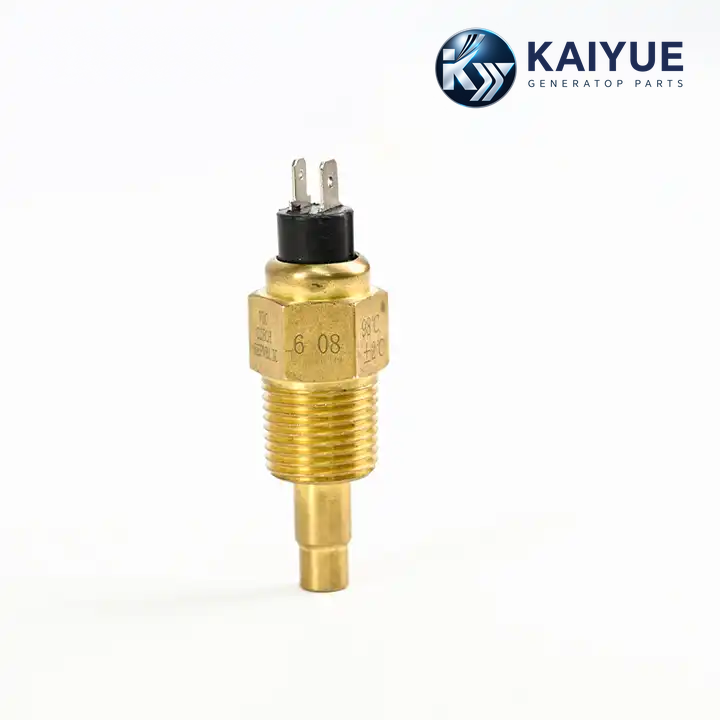
Water Temperature Sensors monitor engine coolant so the gauge or controller can indicate overheating. Many temperature senders change electrical resistance as the coolant heats up. With the engine cool, check the connector and look for leaks around the fitting. Match the sender curve, thread and grounding arrangement when replacing it.
1PRODUCTS TO EXPLORE
Water Temperature Sensors Technical Guide
Product features
Coolant temperature senders are matched by thread, temperature range, terminal style and sensing curve. The gauge or controller must expect the same type of signal.
How it works
Many senders change resistance as temperature rises. A matched gauge or configured controller converts that change into a reading.
Troubleshooting
If the panel jumps between hot and cold, compare against an independent temperature reading. Inspect the ground path, connector and harness before replacing the sender.
Replacement options
Check the size on the existing threaded port and verify the electrical curve. The catalog item identifies two thread-size options.
How to replace it
Let the engine cool and relieve pressure according to its manual. Use the specified seal, refill and bleed as needed, then check for leaks and compare the reading.
PRODUCT GUIDANCE
Frequently asked questions
Water Temperature Sensors guidance for selection, use and purchasing.
Explore more FAQs ↗What does a water temperature sender do?+
It measures engine coolant temperature and provides a signal to the gauge or controller for indication and high-temperature protection.
View this answer in FAQs ↗How do I match a temperature sender to my gauge?+
The sender's resistance curve must match the gauge or controller configuration, otherwise readings will be wrong. Confirm the required curve — confirm the specification with our team.
View this answer in FAQs ↗What thread size does the sender need?+
Thread size and sealing must match the engine port. Record the existing thread specification before ordering — confirm the specification with our team.
View this answer in FAQs ↗Why does the gauge read high immediately after start?+
A high reading from cold usually indicates a wrong sender type, short-circuit wiring or a failed sender. Verify the sender resistance when cold.
View this answer in FAQs ↗Can one sender feed both a gauge and a controller?+
Some installations use dual-output senders or separate devices for gauge and protection. Confirm the arrangement your system requires — confirm the specification with our team.
View this answer in FAQs ↗How do I test a water temperature sender?+
Measure resistance at known temperatures and compare with the published curve. Confirm the reference values for your sender — confirm the specification with our team.
View this answer in FAQs ↗Does sealant affect sender performance?+
Excess or incorrect sealant can affect earthing and thermal contact, causing inaccurate readings. Follow the installation instructions for sealing.
View this answer in FAQs ↗Why is the high-temperature alarm triggering intermittently?+
Intermittent alarms may indicate genuine cooling problems, a failing sender or loose wiring. Check coolant condition and sender wiring together.
View this answer in FAQs ↗Are temperature senders interchangeable between engines?+
Interchange requires matching thread, range and resistance curve. Confirm per application — confirm the specification with our team.
View this answer in FAQs ↗What should I provide to order the correct sender?+
Provide the existing part number, thread size, temperature range, gauge or controller model, quantity and photos. ---
View this answer in FAQs ↗Guidance varies by model and installation. Confirm specifications and suitability for your selected part with our team.
Not sure which part you need?
Send a model number, reference photo or application details to our team.
