
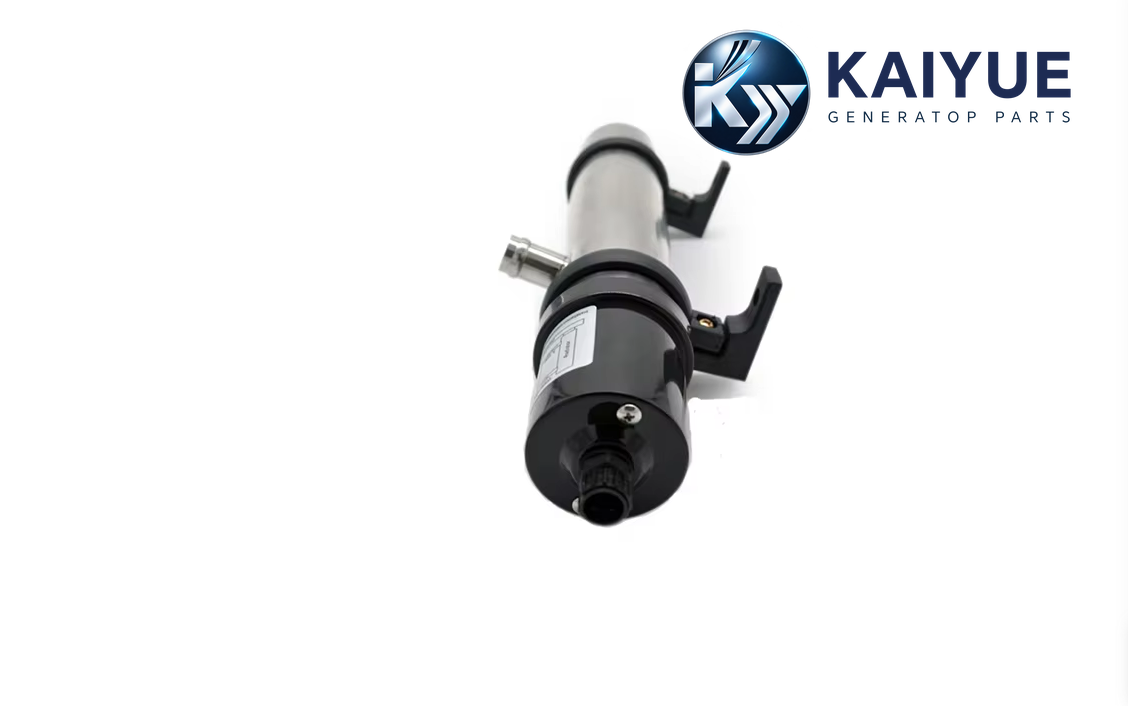
Generator Water Heater
500W
Diesel Generator Water Heater 500W 1000W 2000W 3000W Engine Self-circulating Preheater Thermostat Electric Water Jacket Heaters

KAIYUE has 20 years experience for genset parts.
A generator water heater keeps engine coolant warm during standby to help the engine start in cold conditions. A heating element warms the coolant, and circulation depends on the heater design. During service, inspect hoses for leaks or restrictions and verify thermostat operation. Refill and bleed the circuit as specified before energizing.
Diesel Generator Water Heater 500W 1000W 2000W 3000W Engine Self-circulating Preheater Thermostat Electric Water Jacket Heaters
A generator water heater keeps coolant warm during standby. Compare supply voltage, heating power, hose connections, thermostat arrangement and installation orientation.
An electric element heats the coolant. Natural circulation or a pump, depending on the model, transfers heat to the engine. The thermostat limits heating as coolant temperature rises.
If the heater runs but the engine stays cold, inspect for air pockets, kinked hoses, closed valves and circulation faults. Leaks or repeated electrical trips warrant an isolated inspection.
The catalog covers a water-jacket preheater with multiple power options. Confirm the required supply, wattage and connection size for your engine.
Isolate power and let the engine cool before opening the coolant circuit. Install the heater in the specified orientation, refill and bleed the system, then verify circulation before energizing.
Generator Water Heater guidance for selection, use and purchasing.
Explore more FAQs ↗It keeps engine coolant warm while the set is on standby, so the engine can start and accept load more reliably in cold conditions.
View this answer in FAQs ↗Rating depends on engine coolant volume, ambient temperature and the required coolant temperature. Confirm the recommended wattage for your engine — confirm the specification with our team.
View this answer in FAQs ↗Heaters are available in different AC voltage ratings. Confirm the supply voltage and phase for your installation — confirm the specification with our team.
View this answer in FAQs ↗Some heaters include an integrated thermostat while others require an external control device. Confirm the configuration of the model — confirm the specification with our team.
View this answer in FAQs ↗Check the supply voltage, thermostat operation, heater element continuity and whether coolant circulation is blocked or airlocked.
View this answer in FAQs ↗Heaters are normally installed low in the coolant circuit to allow natural circulation. Follow the engine manufacturer's installation guidance.
View this answer in FAQs ↗Continuous operation is typical in standby applications when controlled by a thermostat. Operation without proper control can overheat the element.
View this answer in FAQs ↗Ensure the heater is never energised without coolant, maintain correct coolant quality and avoid scale build-up. Dry running usually destroys the element quickly.
View this answer in FAQs ↗Pre-heating reduces cold-start stress on the engine, which is one reason standby sets commonly use heaters.
View this answer in FAQs ↗Provide the engine model, coolant capacity, required wattage, supply voltage, thermostat requirement, connection type, quantity and photos. ---
View this answer in FAQs ↗Guidance varies by model and installation. Confirm specifications and suitability for your selected part with our team.
Send a model number, reference photo or application details to our team.
