

KAIYUE / PROFESSIONAL PRODUCTS
Engga AVR Series.
Find your next part.
Engga AVR Series regulators help keep output voltage steady in compatible alternators. A feedback circuit compares sensed voltage with the reference and adjusts excitation to correct the error. With the alternator isolated, check the sensing and field terminals for looseness, and match the board number and excitation supply to the original.
1PRODUCTS TO EXPLORE
Engga AVR Series Technical Guide
Product features
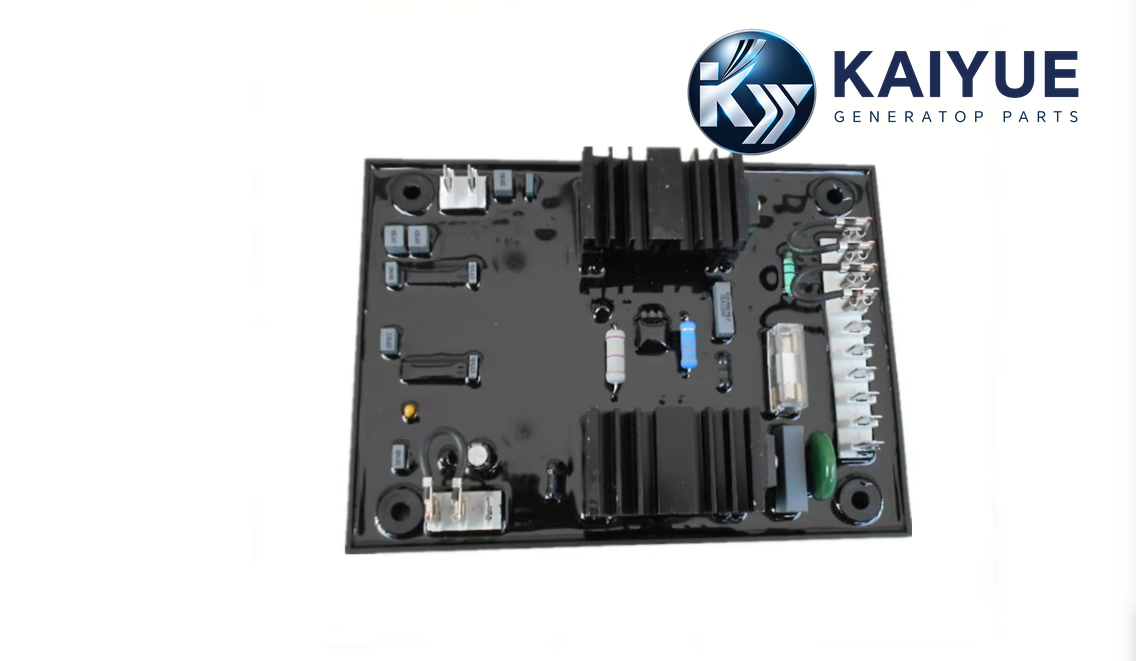
The Engga AVR Series lists the WT-2 reference. Identify the alternator version and compare the feedback inputs, power source and field connection before ordering.
How it works
The regulator matches sensed output voltage against a reference and adjusts exciter drive to correct the error.
Troubleshooting
If output rises or falls unexpectedly, look for loose sense or field leads with power off. Confirm nominal speed and verify that the sensed voltage represents the output.
Replacement options
Use the WT-2 label and alternator wiring diagram to assess fit. Compare markings on both boards before moving the connectors.
How to replace it
With the set isolated, record the lead positions and approved settings. Recommission using the alternator procedure and verify voltage after a controlled load change.
PRODUCT GUIDANCE
Frequently asked questions
Engga AVR Series guidance for selection, use and purchasing.
Explore more FAQs ↗What is the Engga AVR series used for?+
It covers voltage regulators applied to alternators using a compatible external excitation control arrangement. Confirm which alternator models are supported — confirm the specification with our team.
View this answer in FAQs ↗How do I confirm the correct model before ordering?+
Match the regulator reference, rated sensing voltage, excitation output and physical terminal layout. Send label photos if any part of the reference is unclear.
View this answer in FAQs ↗Can this AVR replace another brand on the same alternator?+
Replacement across brands is possible only when the excitation system and electrical ratings match. Each case should be reviewed — confirm the specification with our team.
View this answer in FAQs ↗Why does voltage build up and then collapse?+
This pattern often indicates an excitation fault, a failing regulator output stage, a rotating diode problem or protection operating due to under-frequency. Check engine speed and excitation circuit integrity.
View this answer in FAQs ↗What is the correct commissioning sequence?+
Check wiring, confirm rated speed, energise with no load, verify voltage and frequency, then apply load in steps while monitoring stability.
View this answer in FAQs ↗Does ambient temperature affect AVR performance?+
Yes. High enclosure temperature can reduce reliability and may trigger protective behaviour. Confirm the operating temperature limits of the model — confirm the specification with our team.
View this answer in FAQs ↗How do I prevent voltage overshoot during start-up?+
Correct stability settings and a proper soft-start or build-up characteristic reduce overshoot. Adjust in small increments and confirm with measurements.
View this answer in FAQs ↗Can I parallel generators using this regulator?+
Parallel operation requires appropriate droop or compensation functionality. Confirm whether your model supports it — confirm the specification with our team.
View this answer in FAQs ↗What spare parts should accompany an AVR replacement?+
Consider excitation fuses, terminal hardware and any required mounting accessories. Confirm what is supplied with the regulator — confirm the specification with our team.
View this answer in FAQs ↗What should be included in an enquiry?+
Include the regulator reference, alternator model, rated voltage and frequency, excitation type, application, quantity and photos. ---
View this answer in FAQs ↗Guidance varies by model and installation. Confirm specifications and suitability for your selected part with our team.
Not sure which part you need?
Send a model number, reference photo or application details to our team.
